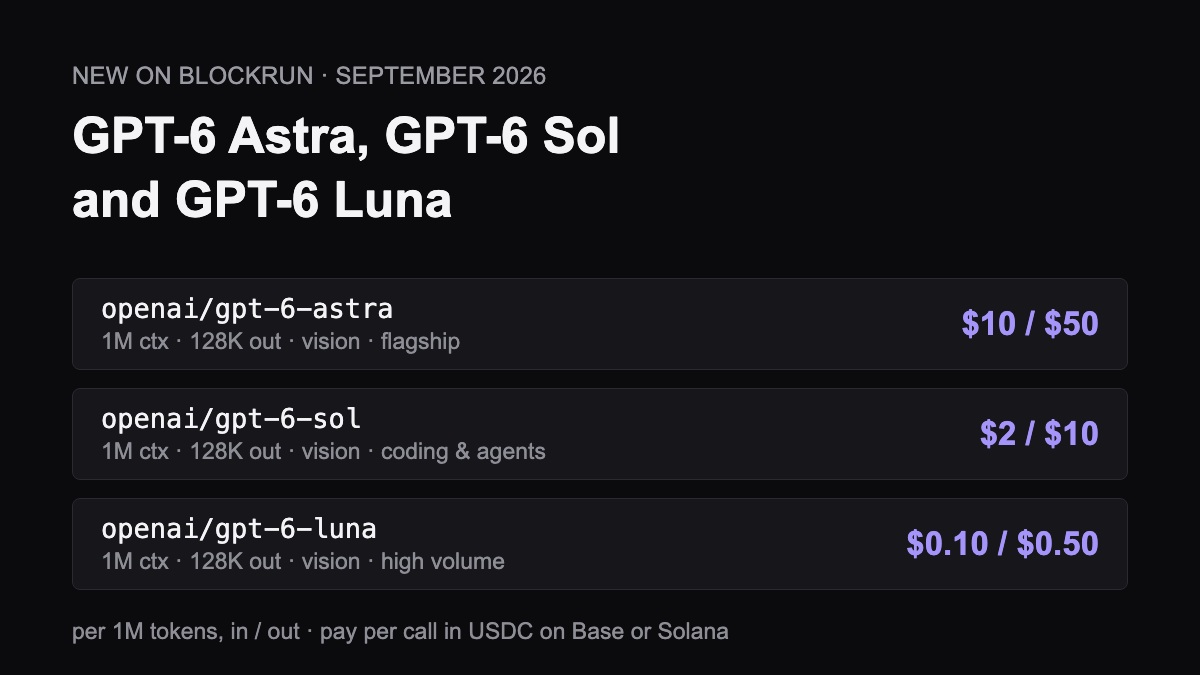
BlockRun × PayAI: Solana x402 Payments Go Live Through the PayAI Facilitator
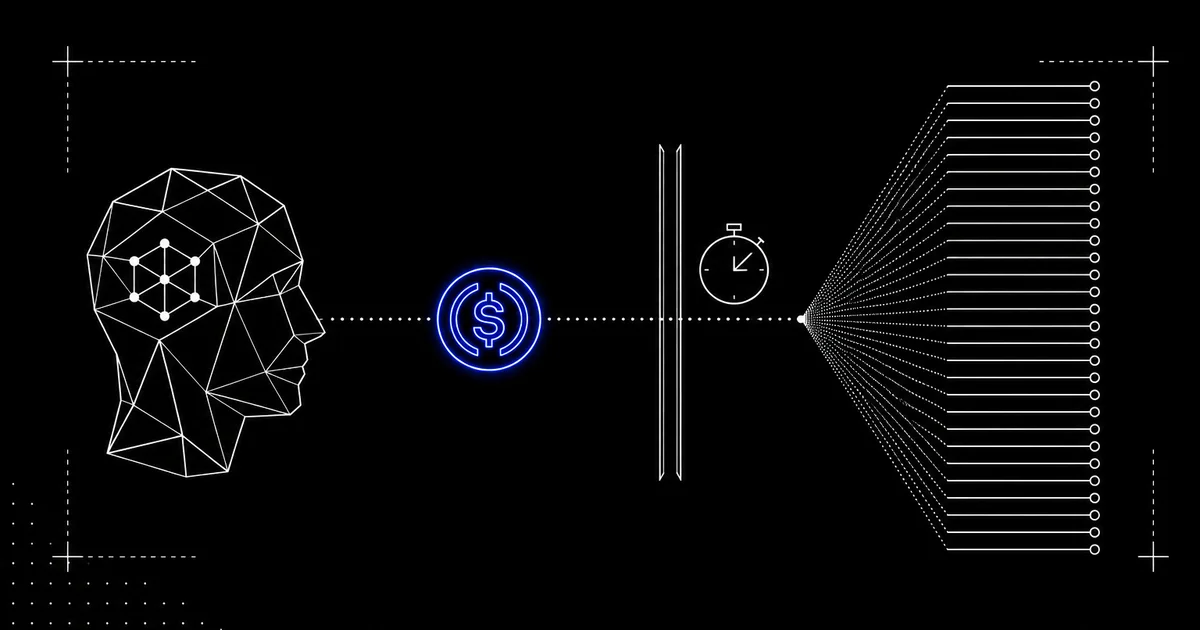
BlockRun is now live on Solana.
Starting today, every x402 endpoint on BlockRun can accept payments in USDC on Solana — settled in under a second, with fees covered for both buyer and merchant. The integration runs on PayAI, the Solana-first x402 facilitator, which handles verification and settlement for us at the protocol level.
No bridges. No wrapped USDC. No "Solana support coming soon." Solana is now a first-class payment rail on BlockRun, sitting alongside Base on every model, every endpoint, every tool.
Why This Took a Partner
The original x402 facilitator built by Coinbase CDP settles payments on Base. It works — BlockRun has run millions of calls through it without a hitch — but it's EVM-only by design. Solana's account model, compute budget, and signature semantics don't map onto an EVM facilitator the way you'd hope.
We didn't want to write our own Solana settlement stack. Building a production-grade x402 facilitator is not a weekend project: you need compliance filtering, dispute handling, replay protection, fee sponsorship, network-level retry logic, and a set of on-chain audits that takes months to earn. The BlockRun team's job is to be the payment and discovery layer for AI services — not to reinvent the settlement plumbing underneath every chain we support.
PayAI already solved this problem. Their facilitator is Solana-native, production-battle-tested, and supports the full x402 spec out of the box. So we integrated.
What PayAI Actually Does
PayAI is the x402 facilitator most of the Solana ecosystem has quietly converged on. Their role in the payment flow is to:
- Verify the buyer's signed payment request matches the price and resource the service quoted
- Settle the transaction on-chain (Solana mainnet or devnet)
- Return a cryptographic receipt the service can attach to the HTTP response
- Cover the network fee so neither the buyer nor the merchant pays gas
All of that happens in under a second. Sub-second settlement matters a lot when you're gating an LLM call: nobody wants to wait 15 seconds for a payment to confirm before they can see their streaming tokens.
The numbers that made this obvious:
| Metric | PayAI |
|---|---|
| Settlement time | < 1 second |
| Success rate | 99.9% across supported networks |
| Free tier | 1,000 settlements/month, 4 req/sec |
| Pay-as-you-go | $0.001 per settlement, unlimited |
| Networks | Solana (primary), Base, Avalanche, Polygon, Sei, SKALE, XLayer, Peaq, IoTeX |
| Gas handling | Covered — buyer and merchant pay $0 |
| Tokens | USDC on Solana (primary), stablecoins + custom tokens on EVM |
For a service like BlockRun that processes hundreds of thousands of payment-gated LLM calls, that $0.001 settlement fee lands squarely in the noise.
How It Works End-to-End
The developer experience is unchanged. You still call BlockRun the same way. The only thing that changes is which blockchain your USDC lives on.
# Base (existing — settled via CDP)
curl https://blockrun.ai/api/v1/chat/completions \
  -H "Content-Type: application/json" \
  -H "PAYMENT-SIGNATURE: <base_usdc_payment>" \
  -d '{"model": "anthropic/claude-opus-4.6", "messages": [...]}'

# Solana (new — settled via PayAI)
curl https://blockrun.ai/api/v1/chat/completions \
  -H "Content-Type: application/json" \
  -H "PAYMENT-SIGNATURE: <solana_usdc_payment>" \
  -d '{"model": "anthropic/claude-opus-4.6", "messages": [...]}'
Same endpoint, same model, same response. Your agent just signs with a Solana keypair instead of an EVM keypair, and BlockRun routes the settlement through PayAI instead of CDP. The 402 Payment Required response now advertises both networks on every resource:
{
  "x402Version": 1,
  "accepts": [
    {
      "network": "base",
      "scheme": "exact",
      "payTo": "0x...",
      "asset": "0x833589fCD6eDb6E08f4c7C32D4f71b54bdA02913",
      "facilitator": "coinbase-cdp+payai"
    },
    {
      "network": "solana",
      "scheme": "exact",
      "payTo": "AQqn...",
      "asset": "EPjFWdd5AufqSSqeM2qN1xzybapC8G4wEGGkZwyTDt1v",
      "facilitator": "coinbase-cdp+payai"
    }
  ]
}
The agent picks whichever network its wallet already supports. If you're on Phantom or Backpack, you use Solana. If you're on Coinbase Wallet or MetaMask, you use Base. BlockRun doesn't care — both settle to the same treasury.
Why Solana Matters for Agent Payments
Solana wasn't an afterthought for us. It was the obvious second chain, for three concrete reasons:
1. Agents want cheap and fast. Solana finalizes blocks in ~400ms and transaction fees are fractions of a cent. For a workload where an autonomous agent might make hundreds of payment-gated API calls per session, the difference between a 2-second Base confirmation and a 400ms Solana confirmation compounds fast.
2. Agents want low fixed overhead. PayAI sponsors network fees on Solana, which means the marginal cost of a $0.001 micropayment is actually $0.001 — not $0.001 plus $0.015 in gas. That's the difference between micropayments being viable and being a rounding error consumed by gas.
3. The Solana ecosystem is building x402. The Solana x402 guide on solana.com/x402 is now an official developer resource. PayAI reports 120M+ x402 transactions across chains since launch. Wallets are shipping native x402 support. This is not a speculative integration — it's where agent commerce is already happening.
What Developers Get Today
If you're building on BlockRun, you get three things starting today:
- Solana wallet support — pay for any BlockRun LLM or tool call from a Solana wallet, using native USDC
- Dual-chain agent wallets — your agent can hold balances on both Base and Solana and BlockRun will accept whichever one signs the request
- Zero migration work — the API surface is unchanged. If your agent was already paying via x402 on Base, adding Solana is a wallet-level change, not an integration project
If you're running one of the 55+ LLMs on BlockRun — GPT-5.4, Claude Opus 4.6, Gemini 2.5 Pro, Grok 4, DeepSeek V3, MiniMax M2.7 — all of them now settle on either chain, at the same markup, through the same 402 Payment Required flow.
Why We Picked PayAI
We evaluated every production x402 facilitator on Solana. PayAI won on four things that mattered:
- Production-ready, not a demo. Trusted by 1000+ companies, 99.9% success rate, live with real transaction volume — not a testnet integration with a roadmap promise.
- Multi-network by default. PayAI supports nine networks (Solana, Base, Avalanche, Polygon, Sei, SKALE, XLayer, Peaq, IoTeX) through one endpoint. If we ever need to expand beyond Solana and Base, the integration path is already paved.
- Gasless UX. Fees covered for buyer and merchant. This is the only way micropayments actually work at the $0.001 tier.
- Clean drop-in. A single
FACILITATOR_URLenvironment variable, no API keys, no custom auth scheme. The integration took a few hours — not a few weeks.
PayAI's own positioning — "The fastest way for AI agents and apps to transact" — lined up exactly with what BlockRun needs to be for the agent ecosystem. The partnership was obvious.
What's Next
Solana is the beginning, not the end. PayAI's multi-network facilitator opens a path for BlockRun to expand to every low-fee chain the agent economy cares about — Avalanche, Polygon, Sei, and beyond — without rewriting our settlement layer each time. We ship Solana today and iterate from there.
For developers: nothing changes. Your code, your API calls, your models. The payment rail underneath just got wider, cheaper, and faster.
For agents: your wallet just became more portable. BlockRun accepts USDC on Base. BlockRun accepts USDC on Solana. Pick whichever chain your wallet lives on and we'll handle the rest.
Get started today:
- Solana payments live on every x402 endpoint at
blockrun.ai/api/v1/* - PayAI facilitator — facilitator.payai.network
- Learn more about x402 on Solana — solana.com/x402
- Read the integration guide — BlockRun docs
The payment layer for AI just doubled in size. One wallet, two chains, 55+ models, one request.