BlockRun

Signal

Ideas shaping the agent economy.

An agent walking toward a turnstile checkpoint while a human hand lowers a price tag above it; a receipt with a check mark waits on the other side
Aug 2026PaymentsAgents

AG-UI Pauses the Agent. x402 Prices the Call.

CopilotKit's human-in-the-loop primitive is exactly the UX a paying agent needs before it spends. A runnable AG-UI + BlockRun walkthrough: the agent hits a 402, the price is decoded from the response, anything over a threshold waits for a human, and approval travels as shared state the model cannot forge.

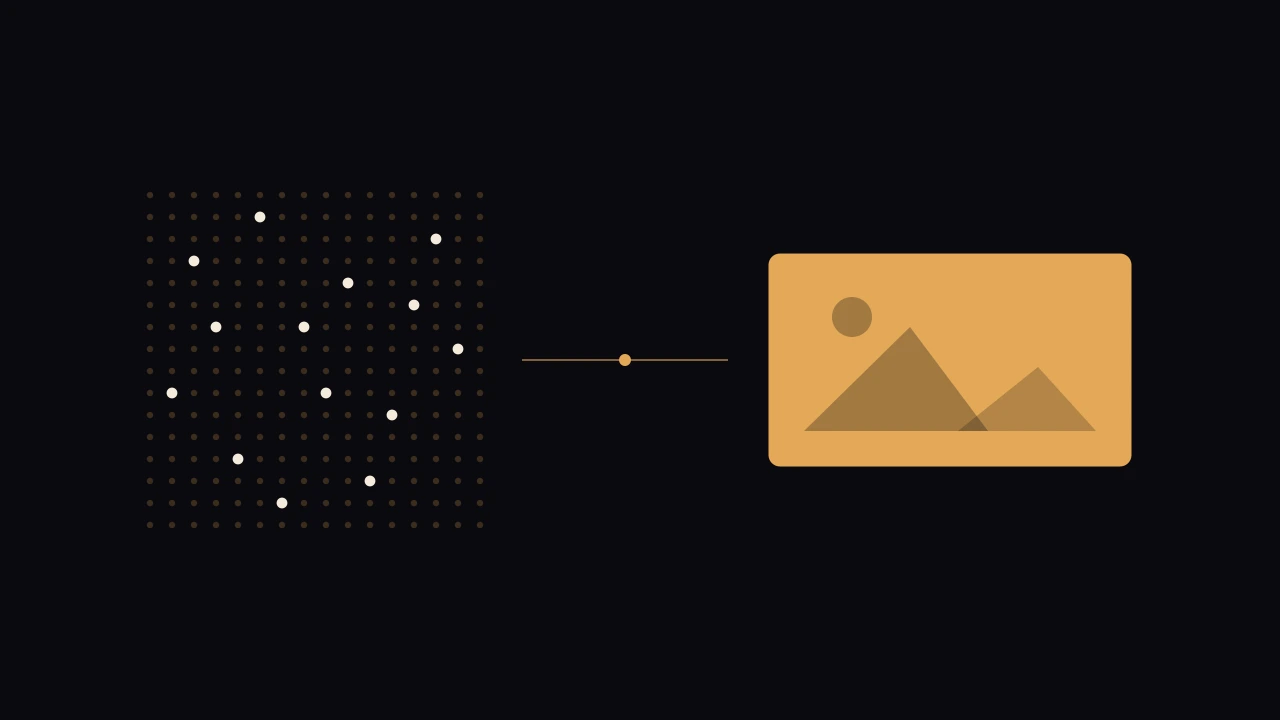
A grid of dim dots with a scattered few lit bright, connected by a line to an image frame — 18B of 320B parameters active, reading a picture
Aug 2026Models

GLM-5.3 Flash: Multimodal at a Tenth the Price

Z.AI's GLM-5.3 Flash is live on BlockRun at $0.15/$0.50 per 1M tokens — a 1M-context model that reads images, for less than most flagships charge for text alone. What we probed before listing it, and the one number on Z.AI's pricing page we deliberately did not use.

Three video frames of increasing size on a horizontal axis, with dots of increasing size beneath each, illustrating resolution tiers as price tiers
Aug 2026Models

Grok Imagine Video 1.5: Resolution Is the Price

xAI's Grok Imagine Video 1.5 is live on BlockRun at $0.08/sec for 480p, $0.14/sec for 720p and $0.25/sec for 1080p — xAI's published rates, plus a flat tenth of a cent per clip. What the tier actually buys, and why the gate that enforces it has to be per-model.

Illustration of two identical video frames beside two price tags, one half the size of the other
Aug 2026Models

Seedance 2.0 Mini: Half the Rate, Same 720p

Seedance 2.0 Mini is live on BlockRun at $0.3996 for a 5-second 720p clip with synced audio — half what 2.0 Fast bills for the same output. Measured token rates, the duration ceiling, and the one thing that makes a cheaper tier worth defaulting to.

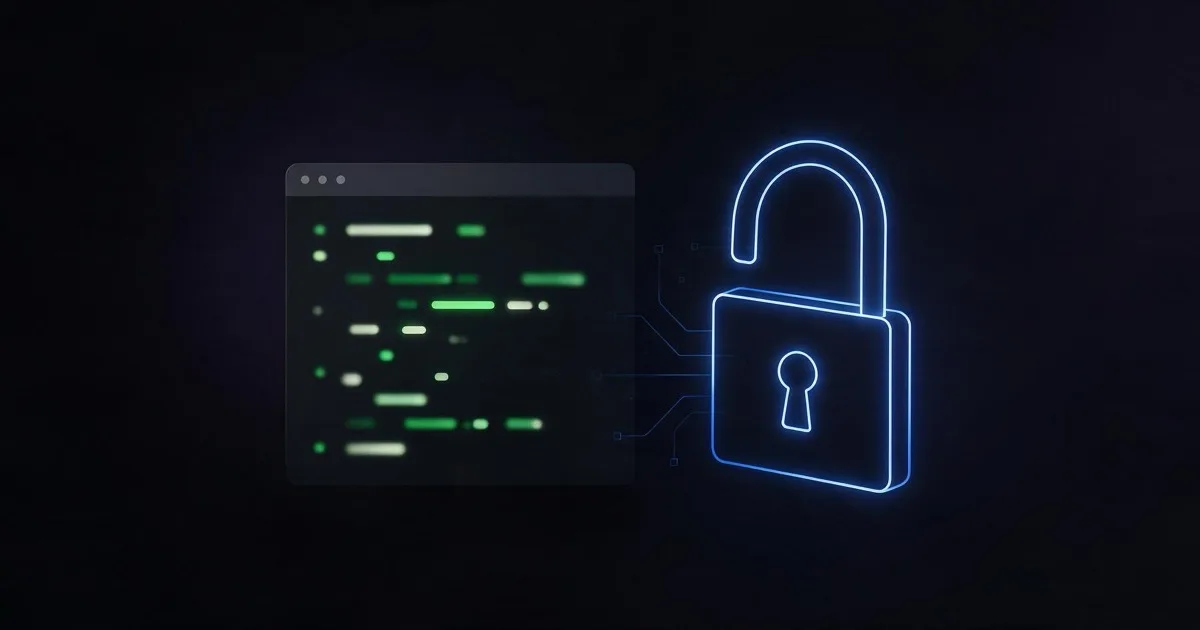
Terminal window with a curl command returning a chat completion, next to an open padlock
Aug 2026ModelsAgents

Free LLM API, No Key: Models You Can curl Right Now

Seven free, OpenAI-compatible LLM endpoints with no API key, no wallet, no signup — verified live today with a bare curl. Model list with context windows, quickstart in curl/Python/JavaScript, and the honest limits.

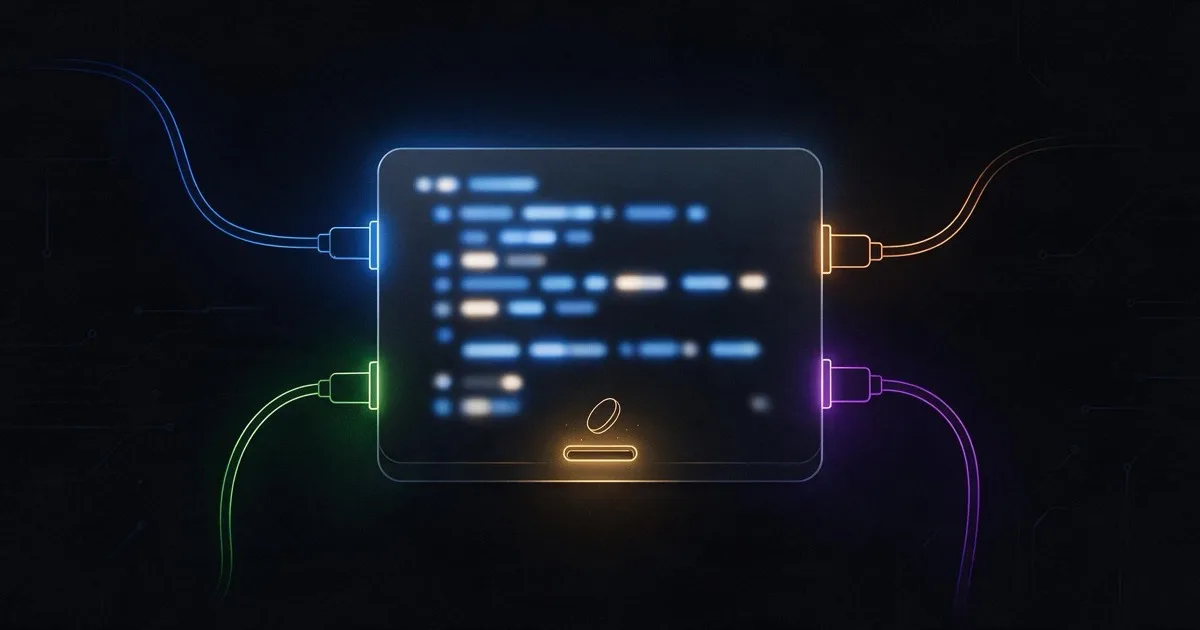
Illustration of a small set of sockets plugging capabilities into a terminal-based coding agent
Aug 2026Agents

The MCP Servers Worth Adding to Claude Code (2026)

Most MCP setups are bloat: servers duplicating what Claude Code does natively, burning context on tools that never get called. Here's a minimal setup that earns its keep — browser, GitHub, live docs, memory — and the one capability MCP alone can't give your agent.

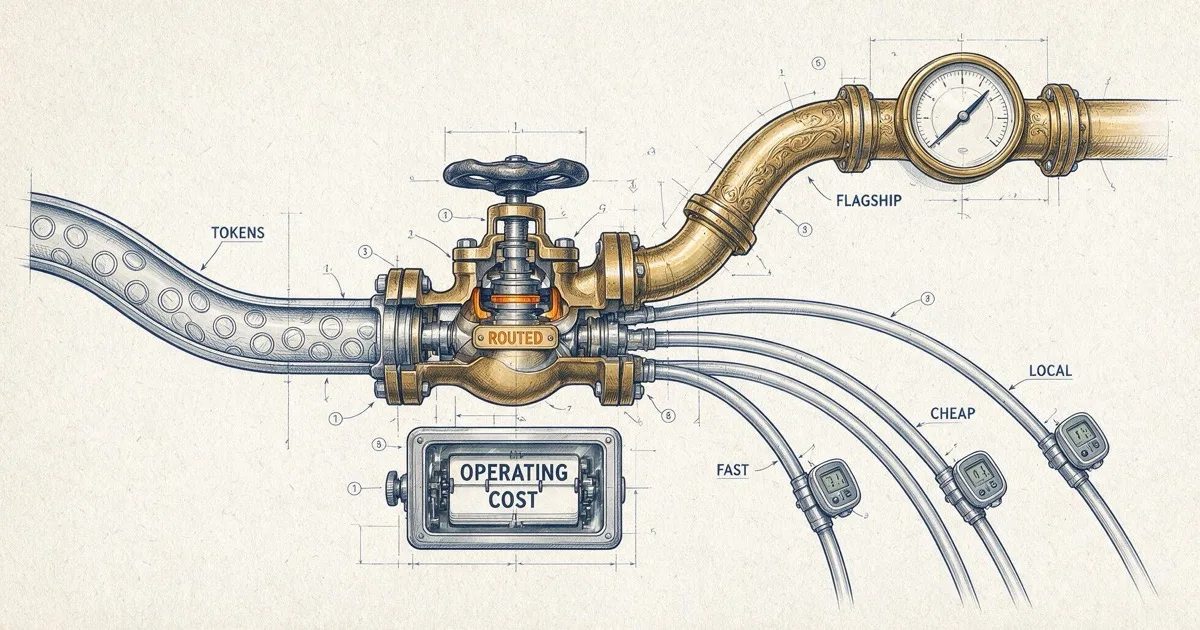
Illustration of a routing valve splitting one stream of tokens between a large expensive pipe and several smaller efficient pipes
Aug 2026Routing

When LLM Routing Saves Money — and When It Doesn't

LLM routers are sold with savings numbers that are technically true and mostly misleading. The honest version: the three places routing savings actually come from, measured numbers with confidence intervals, and the cases where a router won't help you.

Infrastructure layers of an agent-payable API stack
Aug 2026AgentsPayments

100+ Live API Endpoints, Invisible to AI Agents

Every handler served. Nothing was broken. But an agent that reads a manifest before it calls could not see 100+ live endpoints — because the manifest restated the API instead of deriving it. What an audit of three published surfaces found.

An abstract model routing system filtering an Agent request through constraint gates into a qualified model portfolio
Aug 5, 2026Routing

A Constraint-First Model Router for AI Agents

How a local, inspectable Router improved verified Agent success while lowering normalized cost per successful task—and what the evidence still does not prove.

OpenClaw cost and reliability — four structural problems ClawRouter fixes via local routing
Jun 2026RoutingAgents

OpenClaw Is Burning Your Budget and Stalling Your Agents — 4 Fixes From the Issue Tracker

We read OpenClaw's issue tracker for the problems users hit in production: cost spikes from background work, provider outages that deadlock sessions, no spend ceiling for autonomous agents, one model for every task. ClawRouter's local routing, multi-provider fallback chains, and per-run cost caps fix all four.

The State of AI Agent Payments — BlockRun.ai Q1 2026 Industry Report
May 2026Payments

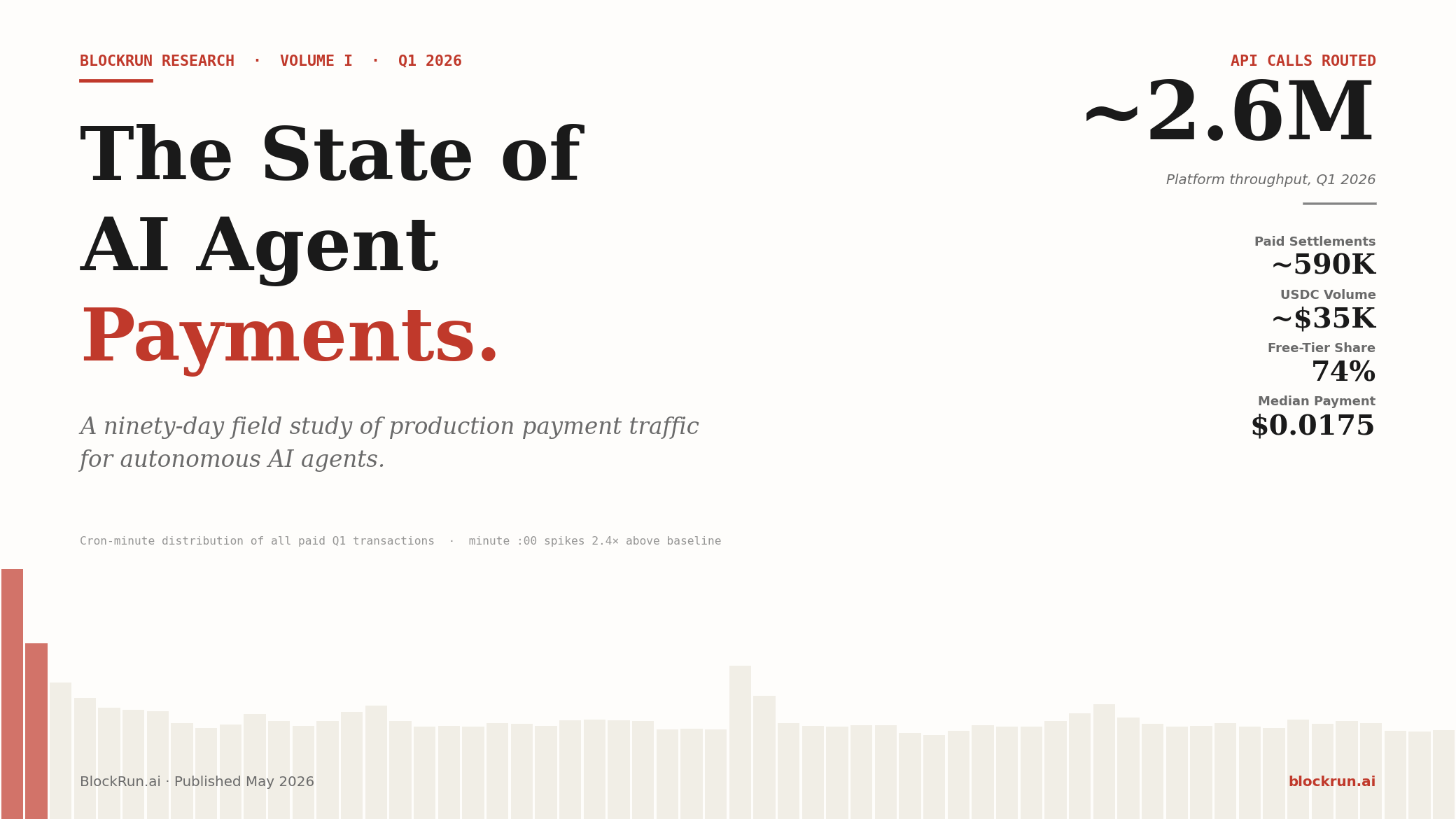
The State of AI Agent Payments — Q1 2026 Industry Report

Ninety days. 2.6M routed API calls. 1,500+ paying agents. The first systematic empirical description of a payment-commerce category whose buyer is software, not human.

Pay for AI API calls in USDC — x402 per-call payment, no API key required
May 2026Payments

How to Pay for AI API Calls in USDC — No Account, No API Key, No Subscription

Stop signing up. Stop entering credit cards. Stop managing API keys. Pay for any LLM call directly with USDC on Base or Solana — settled per request via x402. Tutorial with curl, TypeScript, and Python.

Nanopayments powered by Circle Gateway — abstract glowing river of micropayments flowing through a crystalline payment network
Apr 2026Payments

Nanopayments Powered by Circle Gateway Hits Mainnet — BlockRun Is Live On Day One

Nanopayments powered by Circle Gateway is live on mainnet across 11 EVM chains. BlockRun has been running on Nanopayments through testnet — here's how AI agents pay sub-cent for X data, LLMs, search, and image generation.

ClawRouter decision layer — 15-dimension scoring, tier classification, quality-first fallbacks
Apr 2026Routing

Inside ClawRouter's Decision Layer: Real-Time Quality vs Cost

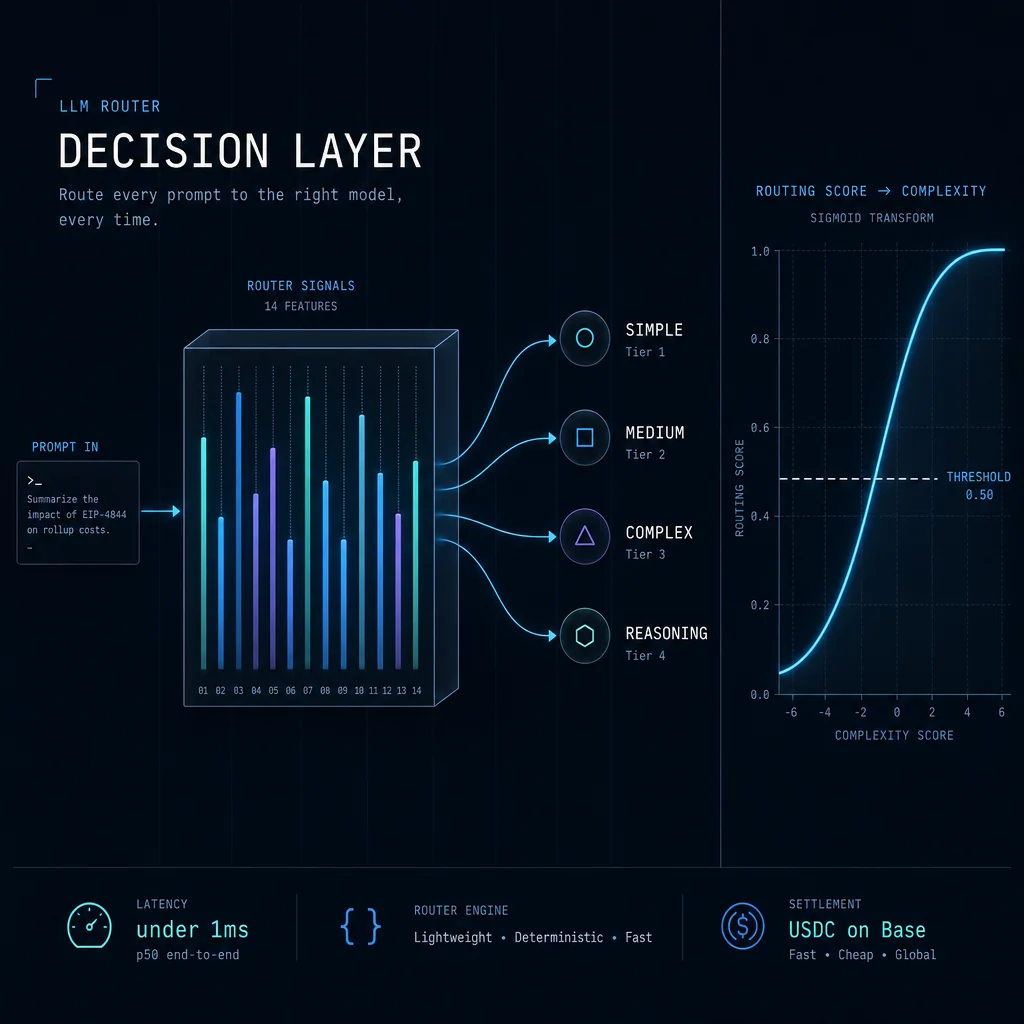
How ClawRouter actually decides which model handles your prompt — the 15-dimension classifier, sigmoid confidence calibration, quality-first fallback chains, and why 'cheapest sufficient' is the wrong framing.

ClawRouter routing diagram on Base — agent-native LLM router with 15-dimension classifier and USDC payment
Apr 2026Routing

ClawRouter: The Only LLM Router Built for Autonomous Agents (Open Source, USDC on Base)

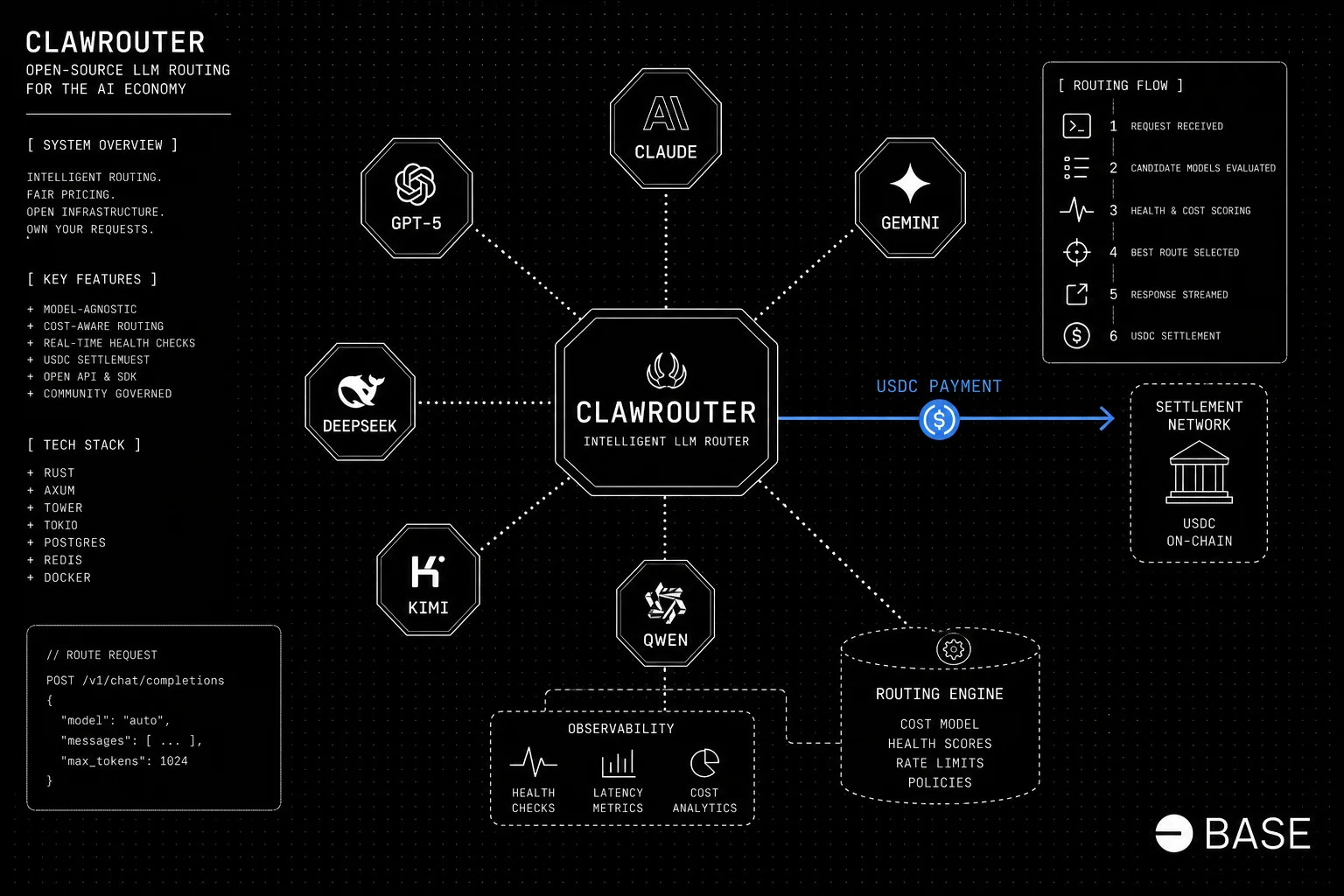
Agents can't sign up for accounts. Agents can't enter credit cards. Agents can only sign transactions. ClawRouter is the only open-source LLM router that lets AI agents operate independently — 15-dimension classifier, sub-1ms local routing, 92% blended cost savings, USDC via x402 on Base & Solana. 9 models free, no signup.

Franklin AI agent with a Base-native USDC wallet — economic agent paying for outcomes
Apr 2026AgentsPayments

Franklin: The First Economic Agent — An Open-Source AI That Spends Its Own USDC on Base

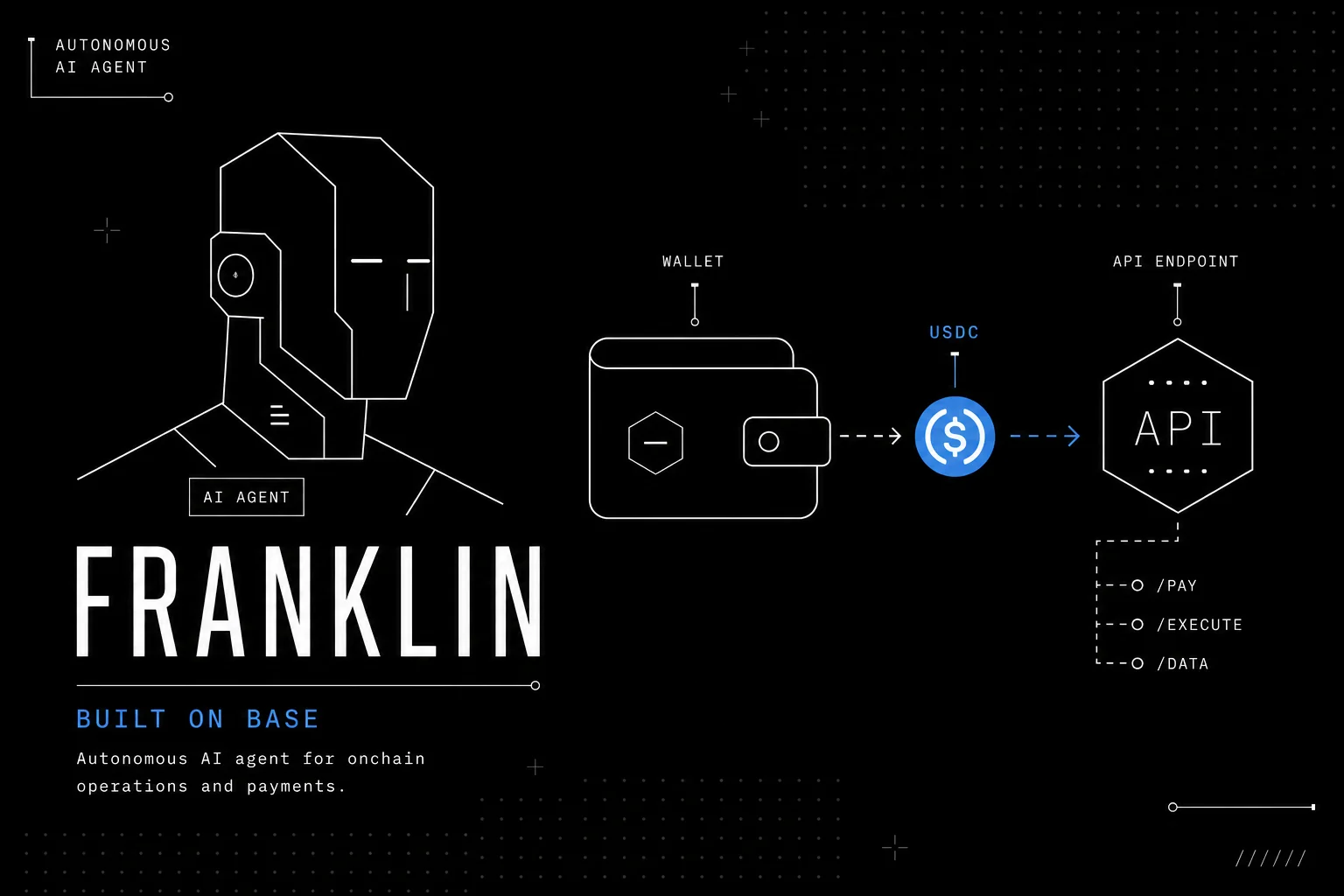
Franklin invents a new category: the Economic Agent — software with a wallet that prices its own actions, spends toward outcomes, and stops at a hard budget cap. Open source (Apache-2.0), TypeScript, 55+ models, 16 built-in tools, USDC settlement on Base & Solana via x402. YOPO pricing — you pay only for outcomes.

Franklin — the AI agent with a wallet, spending USDC per action via x402
Apr 2026Agents

Franklin: The AI Agent With a Wallet — Pay-Per-Action Autonomous Coding

Franklin is the first Autonomous Economic Agent — it spends USDC per action under a wallet-enforced budget cap. 55+ models, 12 built-in tools, free to start on 9 NVIDIA-hosted models (DeepSeek V4, Qwen3, Nemotron Nano Omni vision, and more).

BlockRun partners with PayAI for Solana x402 payments — machine-to-machine settlement on Solana
Apr 2026Payments

BlockRun × PayAI: Solana x402 Payments Go Live Through the PayAI Facilitator

BlockRun now settles Solana AI payments through PayAI, the Solana-first x402 facilitator. Sub-second USDC settlement, gasless UX, 1,000 free monthly transactions — AI agents can pay with SOL and USDC on Solana, no bridge required.

ClawRouter vs OpenRouter — 100 OpenClaw issues analyzed, every structural problem solved
Mar 2026Routing

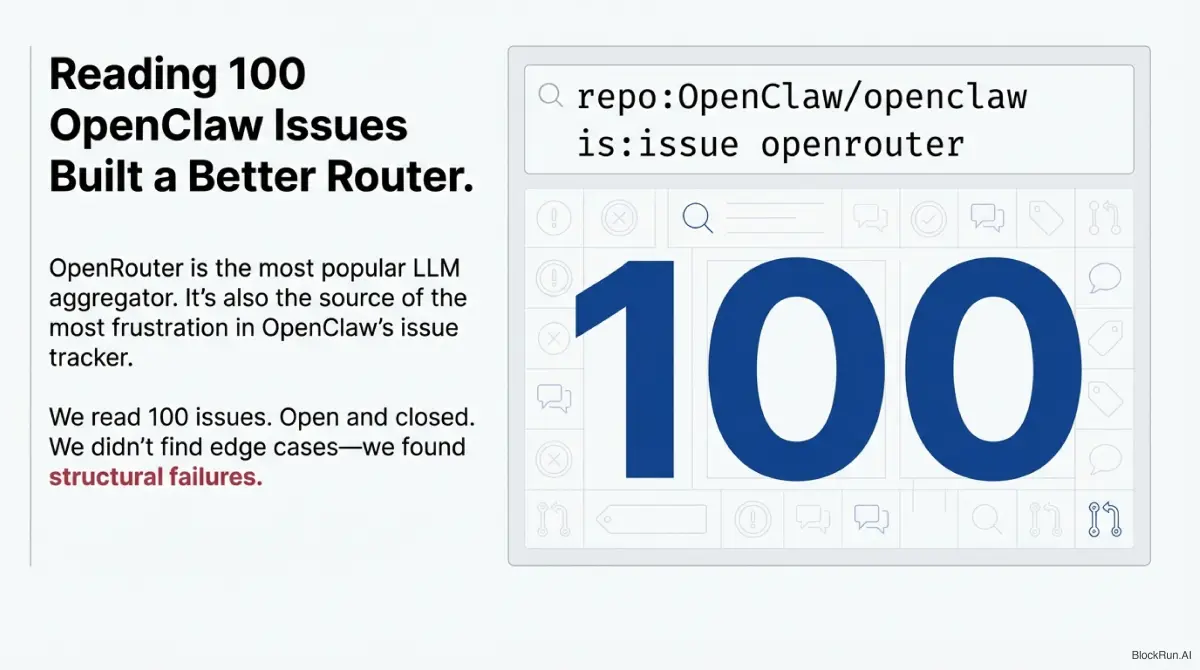
We Read 100 OpenClaw Issues About OpenRouter. Here's What We Built Instead.

OpenRouter is the most popular LLM aggregator — and the source of 100+ issues in OpenClaw's tracker. Broken failover, API key leakage, billing opacity, model ID mangling. ClawRouter solves all of them.

Smart LLM routing — 46 models, 14 dimensions, sub-1ms classification
Mar 2026RoutingModels

LLM Router Benchmark: 46 Models, 8 Providers, Sub-1ms Routing

We benchmarked 46 LLM models from 8 providers through a production payment pipeline. Speed and intelligence are poorly correlated. Here's how we built a 14-dimension classifier that routes requests in under 1ms.

MiniMax M2.7 — the first self-evolving reasoning model, now live on BlockRun
Mar 2026Models

MiniMax M2.7 Is Live on BlockRun — The First Self-Evolving Reasoning Model

MiniMax M2.7 is now available on BlockRun. The first model that deeply participates in its own evolution — matching GPT-5.3-Codex on SWE-Pro at a fraction of the cost.

OpenClaw standalone vs OpenClaw + ClawRouter — full comparison across cost, context, error handling, and budgeting
Mar 2026Routing

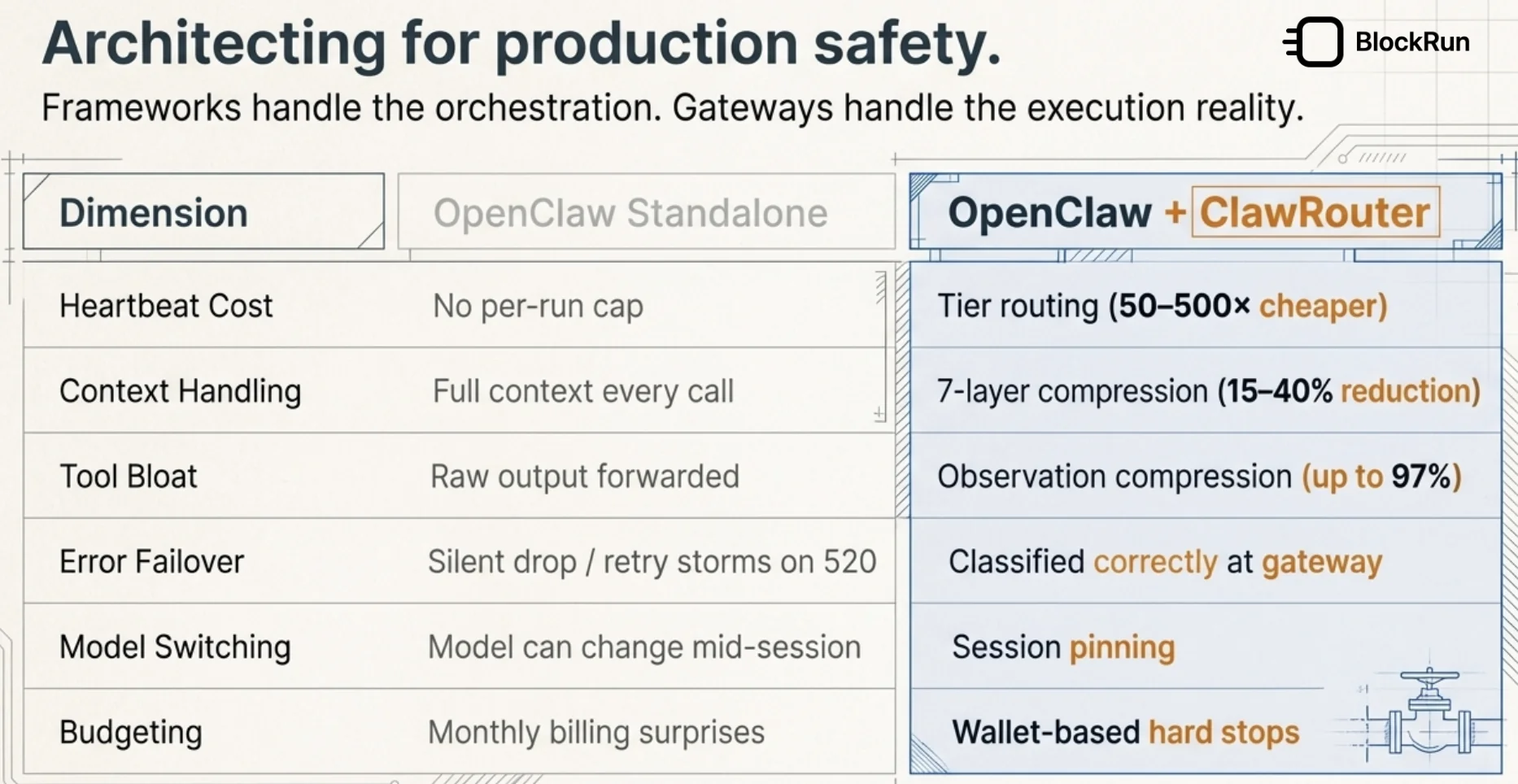
AI Agent API Costs: How ClawRouter Cuts LLM Spending by 500×

AI agents on OpenClaw burn through API budgets with no cost awareness. ClawRouter's 7-layer token compression, automatic tier routing, and wallet-based budget caps cut LLM API costs 50–500×.

The Economically Safe Stack
Feb 2026Payments

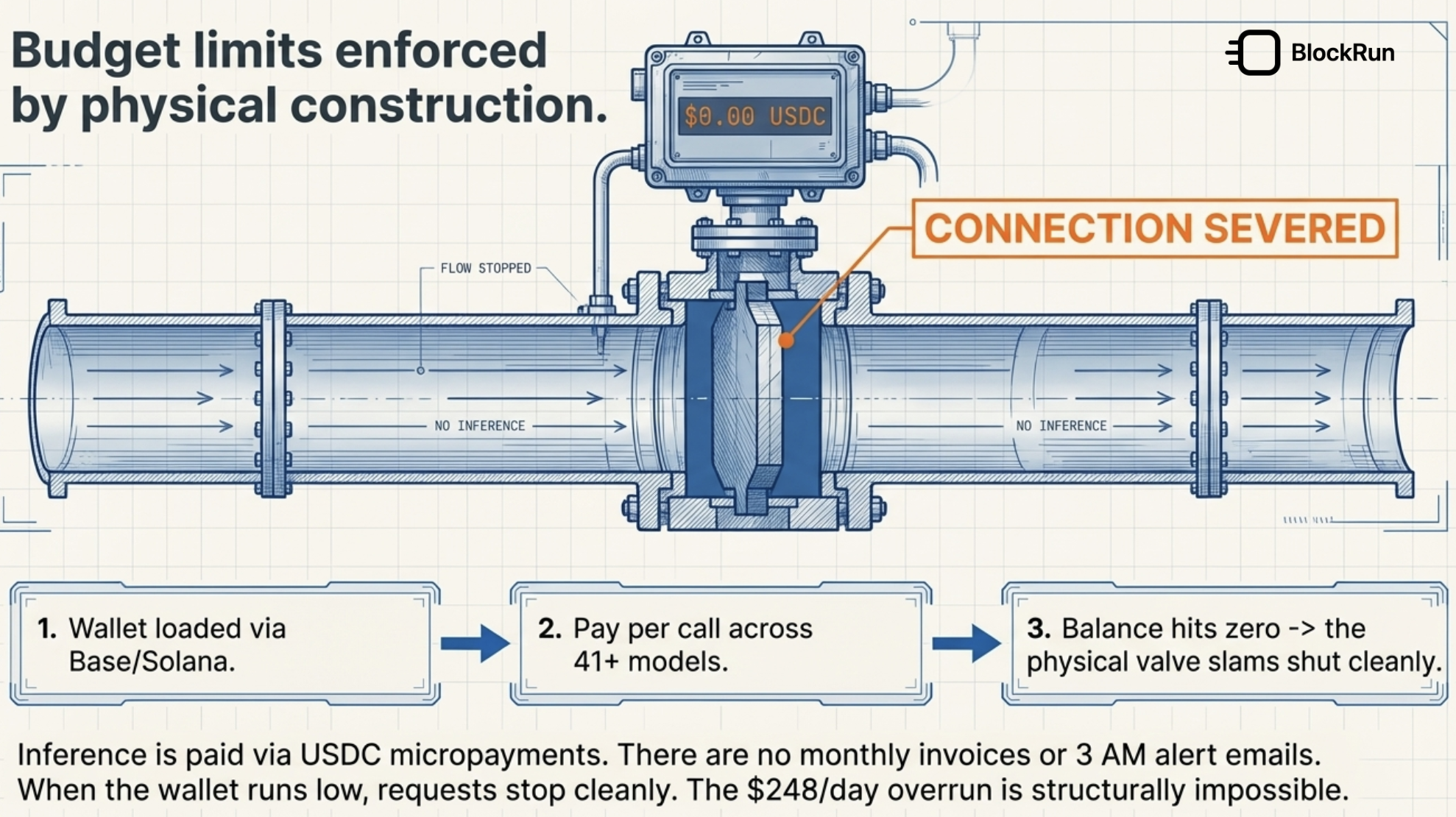
AI API Cost Control: How x402 Prevents $47K Budget Overruns

A multi-agent system burned $47K in API costs. No hacker. No breach. Just bad infrastructure. Here's how x402 protocol-level budget caps prevent AI API cost overruns.

Astronaut in algorithm vortex
Jan 2026Agents

X/Twitter Algorithm: How AI Agents Can Hack Organic Reach

Reverse engineering X/Twitter's algorithm for agent-native content. Learn how AI agents can work with the algorithm to maximize organic reach and virality.

Robotic hand with coin
Jan 2026Payments

x402 Protocol: How AI Agents Pay for APIs Without Human Intervention

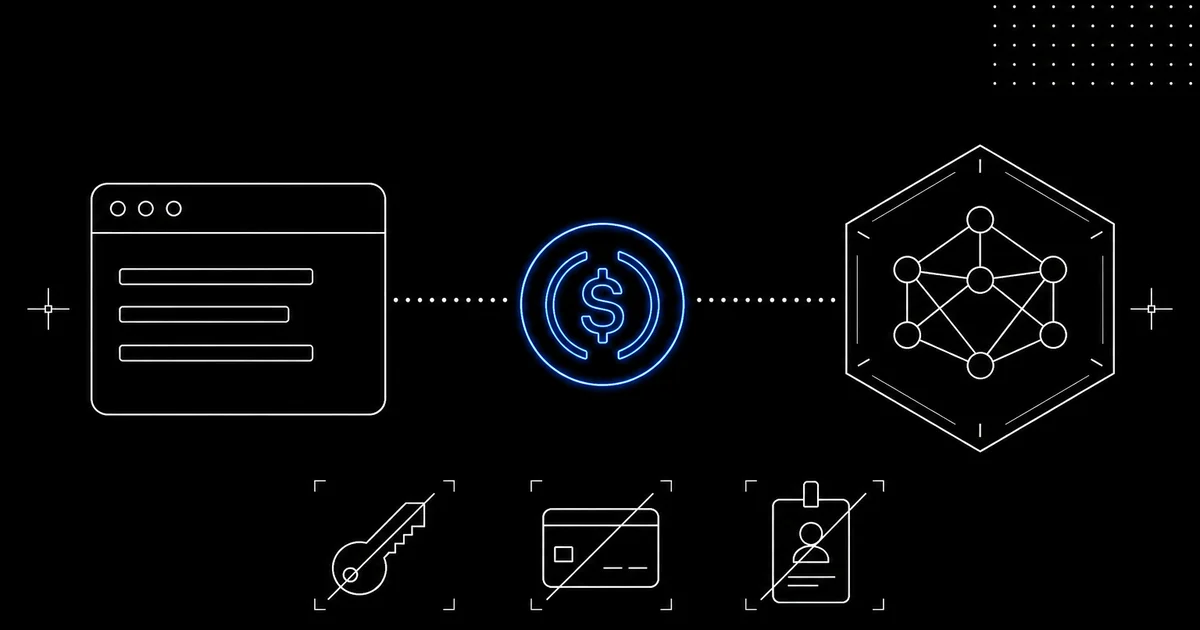
The internet wasn't built for machines to pay. x402 enables native machine-to-machine commerce — AI agents discover, negotiate, and pay for API services autonomously with USDC.